Sleep Paralysis: 4,000 Years of the Same Nightmare
Why you wake up frozen with something in the room — and the ancient monster every culture already named.
You wake in the middle of the night. Your eyes are open. You can see your room. But you cannot move — and you are not alone. Something is here. If you have felt this, two things are true: it was terrifying, and you are in the company of almost every human who has ever lived.
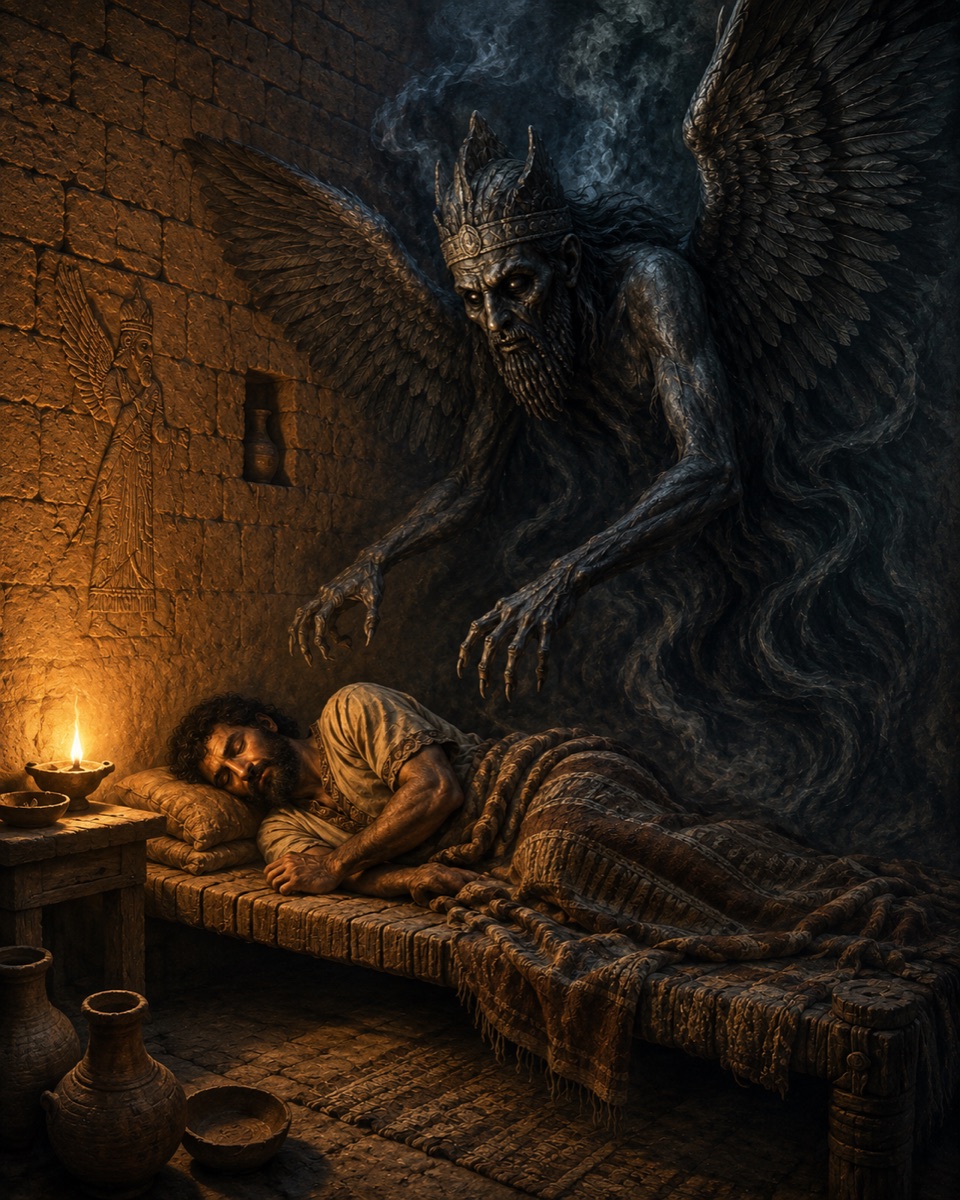
The short answer
Sleep paralysis is a temporary, harmless overlap between dreaming and waking: your body is still locked in the muscle paralysis of REM sleep while your mind wakes up. The "presence" in the room is a hallucination your own brain builds to explain the fear. It is one of the most universal human experiences on Earth — and once you understand it, it loses most of its power.
A demon with a hundred names
The Babylonians blamed a night-demon named Lilitu, nearly four thousand years ago. The Greeks called it Ephialtes — "the one who leaps upon you." In Japan it is kanashibari, to be bound in metal. In China, a ghost sits on your chest. In Newfoundland, the "Old Hag" climbs on and rides you. And in the 1990s, the very same experience put on a new costume and became alien abduction.
Different monster. Identical experience. One brain, ten thousand years.
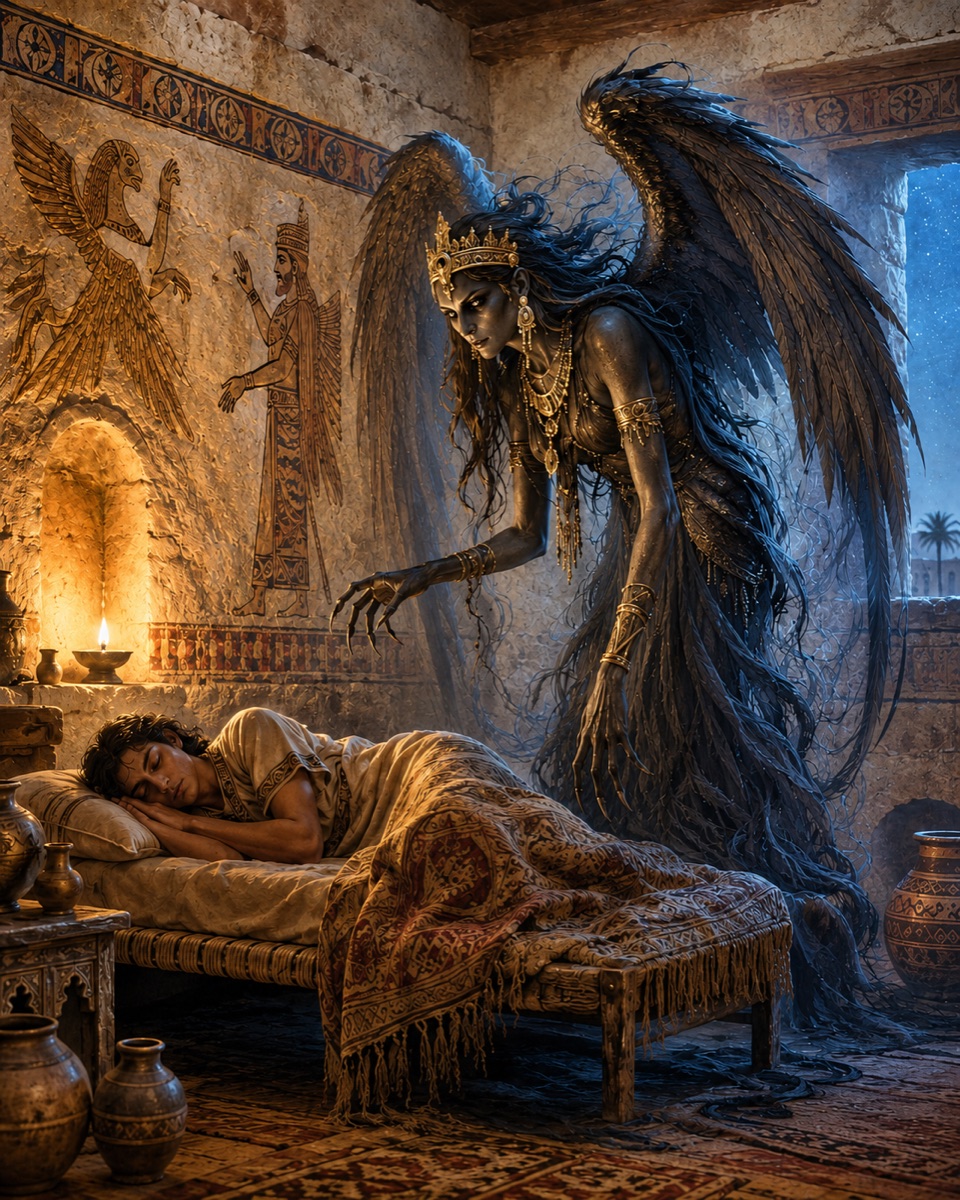
🕰️ The same night, retold across 4,000 years
What's actually happening to you
Every night, while you dream, your brain quietly paralyzes your body so you don't physically act out your dreams. This is called REM atonia, and it is completely normal. Usually that switch flips off a half-second before you wake.
But sometimes your mind comes online first. For a few endless seconds you are awake and aware — staring at your real room — while your body is still locked and your dream is still bleeding into the dark. That is sleep paralysis: dreaming and waking overlapping in the same moment.
It comes in two forms. Hypnopompic (as you wake) is the common one. Hypnagogic (as you fall asleep) is rarer and scarier, because you feel like you were still awake when it grabbed you. You basically were. You got caught in the doorway.
Why your brain builds a monster
Here is the strange part. Faced with "I can't move and I don't know why," your brain's threat-alarm — the amygdala — fires hard, with no target. So it invents one, reaching into memory to build a presence that explains the fear you already feel. That is why the intruder feels like a someone, not a something. And it is why cultures that never met each other all drew the same figure: a dark shape, a weight on the chest, a hag, a demon, an alien.
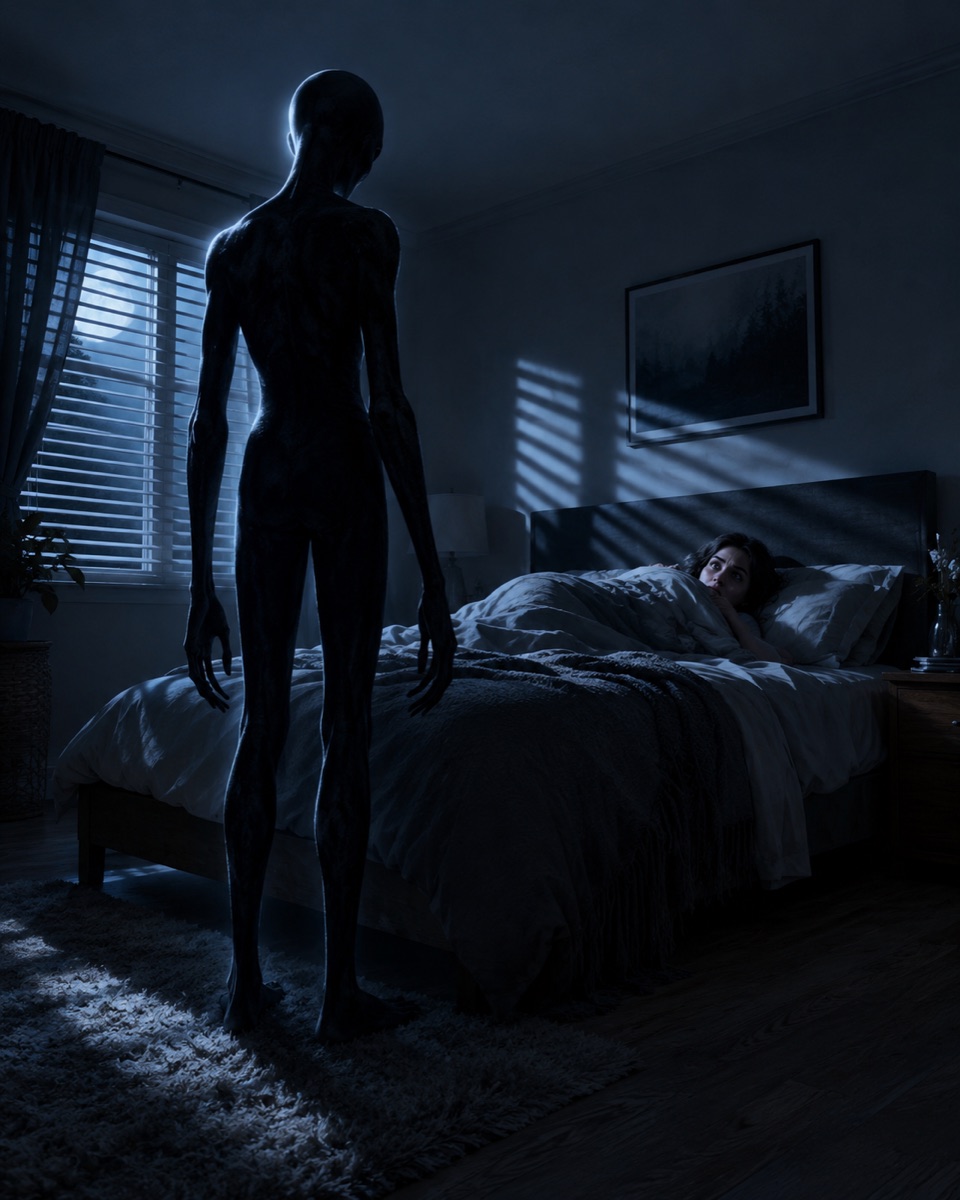
Wait — is that "alien abduction"?
Often, yes. Researchers who studied people who sincerely believe they were abducted found they describe the exact sleep-paralysis kit: woke up frozen, a presence in the room, bright lights, floating, being "examined." Same brain event — but a mind raised on movies about grays fills the "presence" slot with an alien instead of a demon. A 1700s brain reaches for an incubus; a 1990s brain reaches for an extraterrestrial. Identical experience, different era's monster.
Does the full moon cause it? The honest answer
Folklore has tied the moon to restless sleep for centuries, and people genuinely search "full moon sleep paralysis." So here is the truth, both sides. One well-known 2013 study in Current Biology found a small full-moon effect on sleep (about 20 minutes less, and less deep sleep). But it failed to replicate in much larger studies, and datasets of tens of millions of nights found essentially nothing. Where any effect shows up, it is probably moonlight — a bright evening sky — not lunar magic.
And critically: there is no study linking the moon to sleep paralysis specifically. That part is folklore. What actually triggers sleep paralysis is well established — sleep deprivation, irregular schedules, stress, and sleeping on your back.
The part nobody warns you about: it can be beautiful
Take the fear away, and the exact same state becomes something else entirely. Some people report floating, warmth, weightlessness, even euphoria — the sense of lifting gently out of their own body. Same paralysis. Same "presence." But when the threat-alarm stays quiet, the brain reads it all as peaceful, sometimes blissful. The difference between a hellish episode and a heavenly one is almost entirely one thing: whether fear fires. That is the whole switch.
🕊️ How to break out of an episode
- 💬 Name it. "This is sleep paralysis. It's harmless. It always ends." That single thought starves the fear.
- 🌊 Don't fight it. Struggling against the paralysis spikes panic and drags it out. Go limp.
- 👆 Move one small thing — a finger, a toe. Or slow your breathing. That breaks the loop faster than thrashing.
- 👀 Look away from the "presence." Rest your attention on something neutral. Starve the story.
🍿 Six things people never knew
- 📊 About 8% of people experience sleep paralysis at least once — far higher for students and night-shift workers.
- 😱 The word "nightmare" comes from the Mare, a demon believed to sit on your chest.
- 👹 The medieval incubus and succubus demons were almost certainly sleep paralysis, rebranded.
- 🎩 Strangers worldwide report the same "Hat Man" shadow figure without ever meeting.
- ✨ Lucid dreamers use sleep paralysis on purpose as a launch pad into a lucid dream.
- 🐈⬛ In Italy the figure is often a giant cat crushing your chest (the Pandafeche). Your culture shapes what you see.
You are not alone
That is the strangest comfort in all of this. A Babylonian scribe, a medieval villager, a Japanese monk, and you at 4am — all describing the identical night. Not because a demon visits each of us, but because we all carry the same brain, and it does the same beautiful, terrifying thing in the same dark hour. You are not cursed. You are human. Extremely, anciently human. (If you are curious what the demons in your dreams might mean, or how the full moon stirs vivid dreams, we dug into those too.)
🩺 When to get help
One episode after a rough night is completely normal and harmless. But if sleep paralysis is frequent, distressing, or paired with daytime sleepiness, it is worth mentioning to a doctor — it has real, treatable causes (irregular sleep, stress, and occasionally conditions like narcolepsy). You deserve to sleep without dread. This article is educational and is not medical advice.
Had a dream you can't shake?
Get a personal, psychology-grounded AI reading of last night's dream — free.
Decode my dream — free →Stay ahead of every moon event
Get full moon dream insights — free.
No spam. Just dream science before every major moon event.
You're in.
We'll send you dream insights before every major moon event.
Sleep Paralysis FAQ
What is sleep paralysis?
A temporary inability to move or speak as you fall asleep or wake up. It happens when the muscle paralysis of REM dream sleep overlaps with waking awareness — you are conscious but cannot move for a few seconds to a couple of minutes. It is common and physically harmless.
Why do you see a demon or figure during sleep paralysis?
Your brain's threat system fires with no real target, so it builds a menacing presence to explain the fear. This "sensed presence" is why people across every culture report the same intruder — a demon, a hag, a shadow figure, or an alien. It feels real but it is a hallucination made by your own brain.
Is sleep paralysis dangerous?
No. It cannot hurt you and always ends on its own within seconds to minutes. It is frightening but not physically dangerous. If it happens often or causes real distress, it is worth speaking with a doctor.
How do you stop an episode?
Don't fight it — struggling makes it last longer. Focus on moving one small part of your body like a finger or toe, or slow your breathing and remind yourself it is harmless and will pass. To prevent it: keep a regular sleep schedule, avoid extreme sleep deprivation, manage stress, and try not to sleep on your back.
Does the full moon cause sleep paralysis?
There is no scientific evidence that it does. Some studies suggest a small lunar effect on general sleep, but larger studies found little or none, and none link the moon to sleep paralysis specifically. Its real triggers are sleep deprivation, irregular schedules, stress, and back-sleeping.
Sources & References
- Sharpless, B.A. & Barber, J.P. (2011). "Lifetime prevalence rates of sleep paralysis: a systematic review." Sleep Medicine Reviews.
- Cajochen, C. et al. (2013). "Evidence that the Lunar Cycle Influences Human Sleep." Current Biology.
- Cordi, M., Ackermann, S., Bes, F.W. & Rasch, B. (2014). "Lunar cycle effects on sleep and the file drawer problem." Current Biology.
- Casiraghi, L. et al. (2021). "Moonstruck sleep." Science Advances.
- Hufford, D.J. (1982). The Terror That Comes in the Night. University of Pennsylvania Press.
- Jalal, B. & Ramachandran, V.S. — research on the neuroscience of sleep-paralysis hallucinations.
- Kinnier Wilson, S.A.K. (1928) — origin of the clinical term "sleep paralysis."